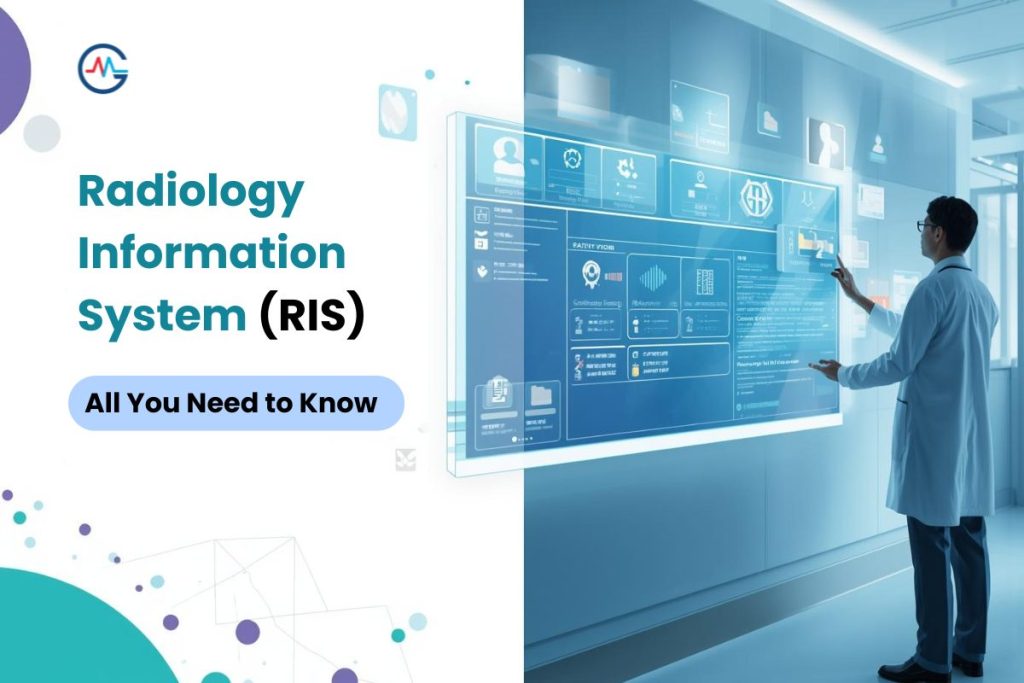
Radiology departments today face an increasing burden of patient load, diagnostic complexity, and reporting requirements. Without the support of dedicated technology, these processes often remain fragmented. Like, scheduling is managed manually, patient data is scattered across systems, and reporting can be delayed due to a lack of structured workflows. Such gaps not only slow down radiologists but also impact the overall efficiency of hospitals.
This is where a Radiology Information System (RIS) becomes indispensable. By centralizing the operational and administrative side of radiology,
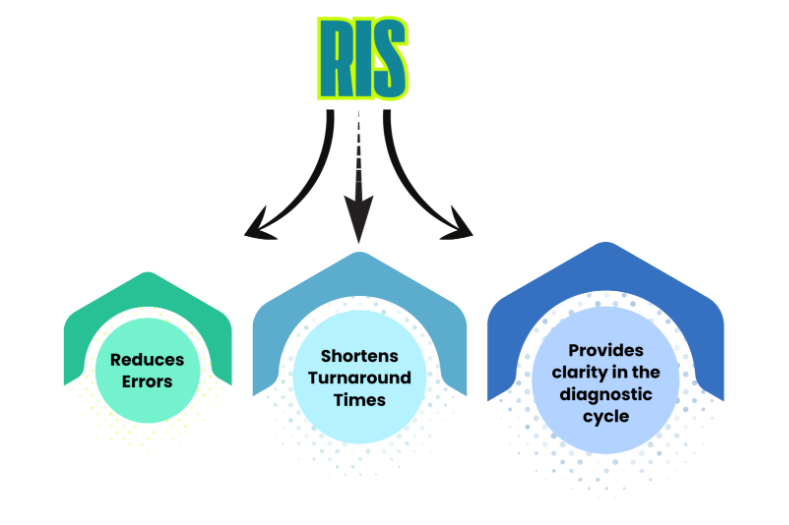
For hospitals aiming to strengthen their teleradiology services or expand multi-branch imaging workflows, the presence of RIS is no longer optional; it is a prerequisite for sustainable and quality-driven care.
What Is a Radiology Information System (RIS)?
A Radiology Information System (RIS) is a dedicated digital platform that organizes and monitors the entire non-imaging side of radiology. Unlike PACS, which focuses on image storage, RIS ensures that patient data, workflow management, and reporting are seamlessly coordinated. For hospitals and diagnostic centers, RIS creates a single source of truth that reduces dependence on manual tracking and enhances collaboration across teams, whether in-house or through teleradiology networks.
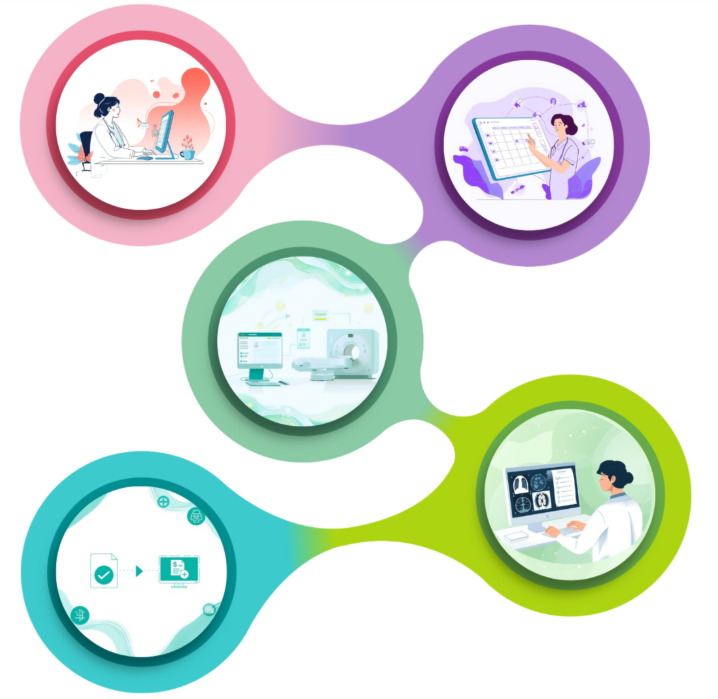
To understand how RIS works in real practice, consider the following flow:
- Patient entry: A referring physician requests an imaging exam, and the patient’s details are registered into the RIS.
- Scheduling: The system allocates a time slot, balancing modality availability (CT, MRI, X-ray) and staff workload.
- Worklist generation: RIS communicates with imaging machines so the correct order is assigned to the correct patient.
- Exam tracking: The status of the imaging exam (pending, in progress, completed) is updated in real time.
- Reporting: Radiologists access the study through RIS, prepare structured reports, and validate them.
- Distribution: Reports are delivered to clinicians, referring doctors, or uploaded into the hospital’s EHR.
- Billing linkage: Once complete, the case is automatically sent for billing or insurance claims.
Key Components of a Radiology Information System (RIS)
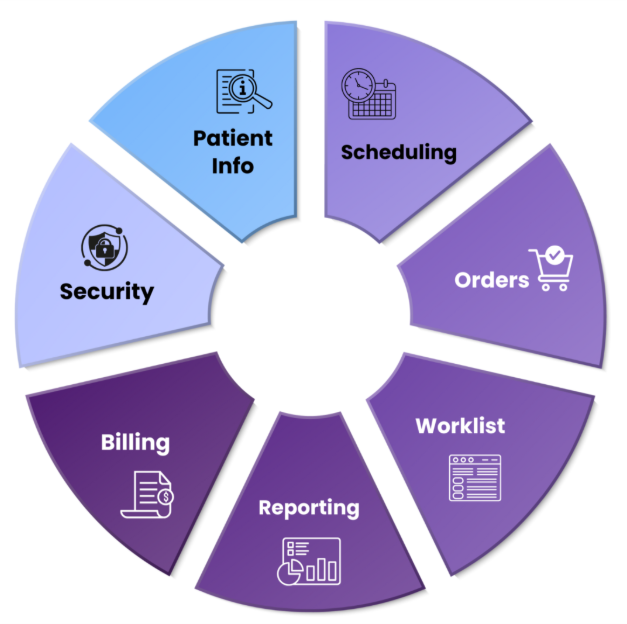
A Radiology Information System is built on several core components that ensure smooth operation. Understanding these parts is essential for hospitals aiming to streamline radiology workflows and strengthen diagnostic efficiency.
Patient Information and Registration
The foundation of any RIS system lies in accurate patient registration. This module collects demographics such as name, age, gender, and contact details, while also linking past medical history and referral information. Unlike paper forms that can be misplaced or inconsistently filled, patient registration in RIS ensures standardized entries across the department.
For example, if a patient undergoes multiple CT scans at different intervals, their entire case history remains accessible under one record. This continuity of data saves time for radiologists and supports better decision-making, especially when patients visit different hospital branches or access teleradiology services.
Scheduling and Appointment Management
An RIS scheduling system is one of the most visible tools for managing patient flow. By aligning imaging requests with modality availability (CT, MRI, ultrasound) and staff workload, RIS minimizes inefficiencies. Instead of clerks relying on manual logs or spreadsheets, the RIS system automatically allocates time slots and sends reminders to patients. For example, if an MRI scanner is under maintenance, RIS prevents it from being booked, avoiding wasted appointments.
In larger hospitals, RIS scheduling balances cases across multiple scanners and ensures urgent requests are prioritized, significantly reducing patient waiting times.
Order Management and Tracking
RIS order management ensures complete visibility of imaging requests, from referral entry to final report. Orders may originate from outpatient clinics, inpatient wards, or even external partners using teleradiology systems. The RIS tracks each step: pending, scheduled, in progress, or completed; so clinicians and radiology staff always know the exam status.
For example, when a chest X-ray is requested in the emergency department, doctors can monitor its progress in real time through the RIS system. This reduces repeated phone calls to the radiology team and allows faster clinical decisions.
Modality Worklist Integration
A critical safety feature of any RIS system is modality worklist integration. Through DICOM-based connections, RIS worklists automatically send validated patient and exam details to scanners, preventing manual entry errors. For example, without RIS integration, two patients with similar names could be accidentally switched, leading to mismatched imaging.
With RIS worklist integration, technologists receive accurate data directly from the system, ensuring that the correct exam is performed for the correct patient. This reduces risk and strengthens confidence in the radiology workflow.
Reporting and Results Distribution
The radiology reporting system in RIS serves as a hub for generating and distributing results. Radiologists can use structured templates, voice recognition, or even AI-assisted drafts to prepare reports within RIS. Once validated, reports are linked to the patient’s record and shared with clinicians or hospital EHRs.
In hospitals offering teleradiology services, RIS enables reports to be securely transmitted to remote locations, allowing physicians to access results quickly. For instance, a rural diagnostic center can perform a scan locally while the report is delivered remotely on the same day through RIS, ensuring both speed and reliability of care.
Billing and Financial Management
RIS billing modules connect diagnostic procedures with financial operations, automating claims and reducing errors. By linking completed exams with standardized billing codes, RIS systems capture revenue more accurately. For administrators, this ensures that every CT, MRI, or ultrasound performed is properly billed and recorded.
For example, if a patient experiences a CT scan with contrast, the RIS automatically registers both the base exam and contrast administration as billable services. This integration streamlines insurance claims and provides hospital leadership with a clear view of radiology department revenues.
Data Security and Compliance
RIS security and compliance features protect sensitive patient data while meeting regulatory standards. Access to RIS systems is role-based, ensuring radiologists, technologists, and administrators view only what is necessary for their role. Audit trails maintain accountability by tracking every change or access point. Moreover, modern RIS platforms comply with HL7, HIPAA, and GDPR requirements, which is vital in cross-border teleradiology workflows.
For example, when reports are transmitted across international networks, RIS ensures the data is encrypted and tamper-proof, protecting both patients and hospitals from legal or ethical risks.
Then What RIS Is Solving?
While radiology has always been a cornerstone of diagnosis, the lack of structured technology often creates inefficiencies that affect both patient outcomes and hospital management. An RIS system directly addresses these challenges by streamlining workflows, reducing delays, and improving accountability. Below is a clear comparison of common problems and how a Radiology Information System (RIS) solves them.
| Problems in Radiology Workflow | How RIS System Solves It |
| High patient no-shows and wasted slots | RIS scheduling system sends reminders and optimizes modality slots, ensuring patients arrive on time and reducing underutilization of CT, MRI, or ultrasound machines. |
| Repeated patient data entry errors | Patient registration in RIS centralizes records across branches, eliminating duplication and ensuring consistency, even for patients accessing multi-location or teleradiology services. |
| Reports getting delayed or misplaced | Radiology reporting system in RIS securely stores and distributes validated reports, so physicians instantly access results without misplacement or workflow delays. |
| Slow clinical decisions in emergencies | Real-time order tracking in RIS keeps emergency doctors updated on exam status, allowing faster decision-making in critical cases where minutes are crucial. |
| Patient identity mismatches at imaging | RIS modality worklists push validated patient and exam details to scanners, preventing wrong-patient errors and ensuring diagnostic safety. |
| Missed charges and financial leakage | RIS billing module automatically logs completed exams with accurate codes, minimizing lost revenue and strengthening hospital financial control. |
| Data privacy and compliance risks | RIS systems enforce role-based access and audit trails, meeting HIPAA and HL7 standards, protecting sensitive records in both local and teleradiology networks. |
Enhance Radiology Workflow with Mediog
Selecting the right RIS system is not just about software; it is about ensuring reliability, scalability, and compliance for your radiology department. Mediog’s platform combines a robust RIS backbone with advanced teleradiology services, enabling hospitals to deliver faster reporting, secure patient data, and efficient multi-branch workflows. Whether it is reducing delays in emergency imaging or ensuring seamless integration across diagnostic centers, Mediog is built to support radiologists and decision-makers with dependable, future-ready technology.
Key strengths of Mediog’s teleradiology services include:
- Cloud PACS–RIS Integration: Unified system for image archiving, reporting, and patient data management.
- AI-Assisted Reporting: One-click structured reporting with intelligent draft support for radiologists.
- Emergency Teleradiology Support: 24/7 coverage for urgent cases, reducing turnaround times.
- Mobile-Friendly Access: Full radiology workflow available on desktop, tablet, or smartphone.
- Multi-Branch Workflow Management: Centralized control for hospitals with multiple branches or networks.
- Vendor-Neutral Archiving (VNA): Long-term, standards-compliant storage accessible anytime, anywhere.
- Financial Monitoring Dashboard: Real-time visibility into departmental performance and billing.
- End-to-End Security: Encrypted data transfer, audit trails, and compliance with HIPAA and HL7 standards.
Conclusion
Radiology is moving toward a future where speed, accuracy, and connectivity define patient care. Hospitals that adopt a reliable RIS system stand at the forefront of this transformation. Mediog empowers healthcare providers with a cloud-ready, secure, and scalable teleradiology platform that aligns with modern demands. For decision-makers seeking efficiency and trust in radiology workflows, Mediog offers the right step forward.
###