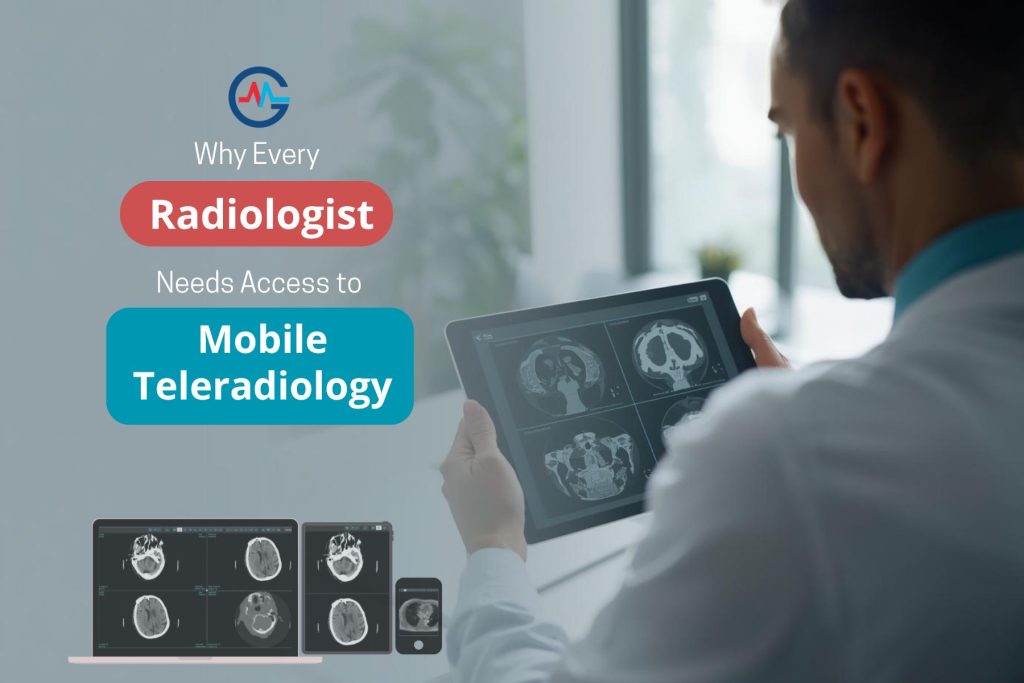
Radiology has always been at the center of modern diagnosis, but the way images are accessed and shared is changing fast. Today, doctors no longer need to be tied to a workstation to review scans or reports. With mobile teleradiology, radiologists can view, analyze, and share diagnostic images securely from a smartphone or tablet. This flexibility helps hospitals deliver faster results and improve patient outcomes.
The growing demand for on-the-go reporting is not just about convenience. It reflects how healthcare is evolving toward faster and connected systems. From mobile X-ray teleradiology to mobile ultrasound and MRI, radiologists are adopting solutions that keep them informed and productive anywhere. This shift is making radiology more responsive, collaborative, and efficient than ever before.
What Is Mobile Teleradiology?
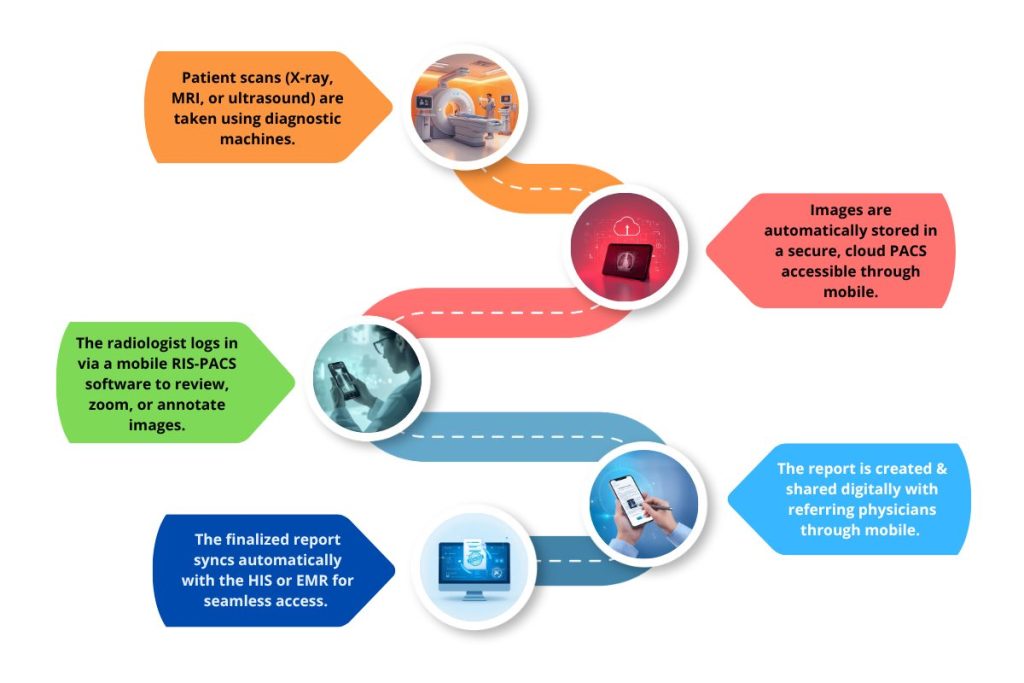
Mobile teleradiology is the ability to access and interpret medical images directly from mobile devices such as smartphones or tablets. It connects the core components of teleradiology, PACS (Picture Archiving and Communication System), RIS (Radiology Information System), and cloud storage, with a mobile-friendly interface. This enables radiologists to review X-rays, CT scans, MRIs, and ultrasounds remotely, without depending on a fixed workstation. Whether in a hospital, diagnostic van, or while traveling, doctors can securely access patient data and share reports in real time.
Unlike traditional teleradiology setups that require desktop-based PACS, mobile teleradiology integrates mobility with compliance and speed. The system ensures images load quickly, remain secure through encrypted connections, and can be shared or discussed instantly with other specialists, improving collaboration and diagnosis accuracy.
Why Do Radiologists Need Mobile Access?
The role of a radiologist is no longer limited to the reading room. In today’s healthcare environment, radiologists must respond quickly to cases that come from different departments, clinics, or even cities. Mobile teleradiology allows them to stay connected with diagnostic workflows from anywhere. It reduces reporting delays, enables faster communication with doctors, and keeps the care process moving even when the radiologist is not on site.
Faster Case Review and Reporting
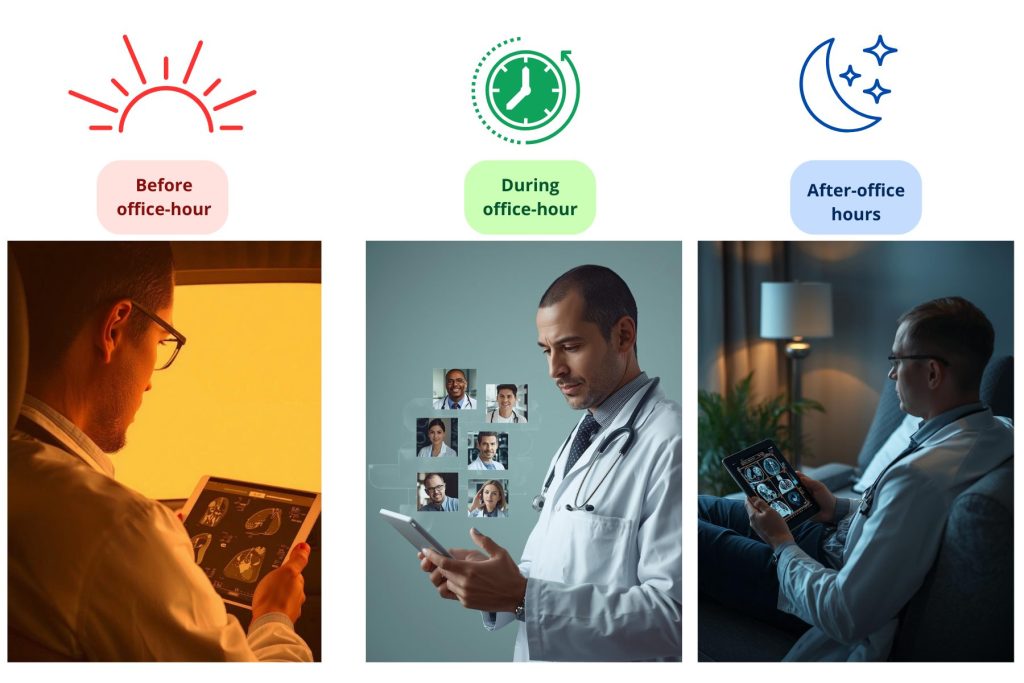
Radiologists can now review scans the moment they are uploaded. Instead of waiting to reach their workstation, they can open the PACS on a mobile device and begin analysis instantly. This helps hospitals maintain continuous diagnostic operations, especially during night shifts, emergencies, or holidays when quick decisions can impact outcomes.
Remote Collaboration with Physicians
Modern healthcare often involves multidisciplinary teams. Mobile teleradiology supports direct communication between radiologists, clinicians, and technicians. Through secure sharing links and mobile chat integration, a radiologist can discuss findings with a referring doctor in real time. This not only saves time but also reduces misunderstandings in clinical interpretation.
On-the-Go Image Access & Comparison
Radiologists often need to compare current scans with older records. Mobile RIS-PACS platforms now allow side-by-side viewing on tablets or larger phones, helping them make accurate observations without logging into a desktop system. The convenience of accessing DICOM images on the go makes it easier to provide second opinions or quick reviews during patient discussions.
Reduced Turnaround Time for Patients
Turnaround time is a key metric for any hospital’s diagnostic efficiency. With mobile teleradiology, reports can be generated faster, leading to quicker treatment decisions. The system automatically syncs completed reports with hospital databases, reducing manual work and administrative delays. This helps improve both patient satisfaction and clinical coordination.
Better Workflow Integration with Mobile RIS-PACS Software
A mobile-friendly RIS-PACS solution brings all essential reporting tools into one interface. Radiologists can search patient data, annotate images, or approve reports directly from their phone or tablet. This tight integration ensures that mobility does not come at the cost of control. Instead, it adds speed and flexibility to the radiologist’s daily routine.
Does It Strengthen Diagnostic Accuracy at all?
Accurate diagnosis depends on how quickly and clearly a radiologist can access and interpret medical images. Mobile teleradiology enhances this by providing immediate access to PACS data and synchronized imaging reports, even outside the hospital network. When scans are available at the right time, radiologists can make faster and more confident clinical decisions.
Continuous Availability of Patient Data
In many clinical settings, small timing gaps can affect outcomes. With mobile access, radiologists can view images, reports, and case histories at any moment. This constant availability ensures that no case remains unattended and that emergencies are handled immediately.
Smarter Review with Integrated AI and Tools
Modern mobile RIS-PACS software often integrates AI tools that assist in detecting abnormalities or highlighting key regions in scans. These features make the review process more accurate and consistent, especially when comparing multiple imaging studies.
Enhanced Collaboration for Second Opinions
When radiologists can securely share annotated images with peers or consultants, they improve the accuracy of interpretations. Mobile teleradiology allows such collaboration in real time, helping doctors validate findings before finalizing reports.
Improved Consistency Across Reports
Since the same system is used for both desktop and mobile reviews, report templates, annotations, and diagnostic notes remain standardized. This consistency reduces human error and maintains quality across different reporting environments.
Real-World Use Cases and Adoption Trends
Mobile teleradiology has evolved from a supportive service to a clinical necessity in hospitals and diagnostic networks. Around the world, hospitals use mobile and cloud-based RIS-PACS systems to manage round-the-clock reporting. The World Health Organization notes that more than 80% of countries in the European Region now include teleradiology in their health systems, highlighting how essential it has become to modern medical infrastructure (Source: WHO). In Ethiopia, for example, the introduction of a web-based teleradiology system across public hospitals cut report waiting time from over 43 hours to less than 5 hours and significantly improved patient satisfaction (Source). Such cases reflect a global pattern: mobile access allows radiologists to review urgent images immediately, collaborate with peers remotely, and maintain consistent reporting quality across all hospital branches.
Mobile diagnostic units are another area where mobile teleradiology is transforming care. Equipped with portable X-ray or ultrasound systems, these units serve remote and underserved areas where radiologists are not physically present. Imaging data from the field is uploaded through cellular or satellite networks to specialists working miles away. Programs like the “MOM Express” in India screened nearly 3,000 women for breast cancer and sent all images to a remote reporting hub through a cloud-based RIS-PACS (Source). The results, returned within hours, demonstrate how mobile teleradiology bridges geographic gaps and ensures that people in rural regions receive the same level of diagnostic accuracy as those in large cities.
In emergency and acute care, mobile teleradiology has proven equally critical. Hospitals without 24-hour radiologist coverage now rely on remote consultations for trauma and stroke cases. A recent study in Turkey reported more than 18,000 teleradiology consultations over six months, most for emergency CT scans, with an average interpretation time of just over an hour (Source: JTCCM). Similar mobile-enabled systems support telestroke programs, where radiologists review CT scans from ambulances or rural hospitals to guide rapid treatment (Source: MedInnovations). These examples show that mobile teleradiology not only expands diagnostic reach but also saves time in the most crucial moments of patient care. It allows radiologists to be virtually present wherever expertise is needed, ensuring faster, coordinated, and high-quality diagnostic outcomes.
Doctors Using the Best PACS Software Mediog Teleradiology
Mediog’s mobile teleradiology platform is designed to keep radiologists connected, wherever they are. Its secure cloud-based PACS allows instant access to imaging studies, report templates, and patient histories directly from mobile devices. Radiologists using Mediog can log in remotely, compare scans, and finalize reports in real time, ensuring that diagnosis never pauses due to distance or timing. The system integrates seamlessly with hospital workflows, giving doctors a smooth experience while maintaining compliance and data protection.
Many leading specialists have already embraced Mediog for its reliability and flexibility. Radiologists such as Dr. Jiyon Sen from AMRI, Dr. Ajit Biswal from Apollo, Dr. Arun Kumar Chatterjee, and Dr. Raman Sau from Spandana Heart and Super Speciality, along with orthopaedic expert Dr. Kingshuk Mondal, rely on Mediog’s PACS to deliver timely and precise diagnostic care.
Conclusion
Mobile teleradiology is shaping the future of diagnostic care, making radiology faster, more connected, and more responsive to real-world needs. For hospitals and radiologists aiming to improve efficiency and access, adopting mobile-ready PACS systems is no longer optional. Mediog provides this advancement with trusted security and smooth mobile integration, helping doctors stay connected to every case and every patient, wherever their work takes them.
###